Reusable Stainless Steel Filter Cartridge vs Disposable PP
Share
A reusable stainless steel filter cartridge wins where the dirt is coarse, steady and predictable: pump and nozzle protection, pre-filtration ahead of a fine stage, cooling and process water with sand and scale, coolant and wash tanks, any line where the same load fills a disposable cartridge again and again. A disposable polypropylene melt-blown cartridge wins where a stated micron cut-off at the fine end matters, where the particle sizes are mixed and a depth medium holds more between changes, and where labor costs more than the cartridge. Most systems that have the argument should run both: the mesh first, the PP behind it. Mesh is a surface filter you wash; melt-blown PP is a depth filter you replace. The short version:
- Stainless mesh: coarse to medium ratings, washable, listed in 1 to 50 µm and 10 to 200 mesh, bought one at a time, the grade verifiable by PMI.
- PP melt-blown: 1 or 5 micron nominal, holds mixed sediment through its thickness, replaced when loaded, bought in packs.
- Cost per year: count the cartridges you throw away, not the price of one.
- Neither is absolute-rated: where a guaranteed cut-off matters, ask for the efficiency behind the rating.
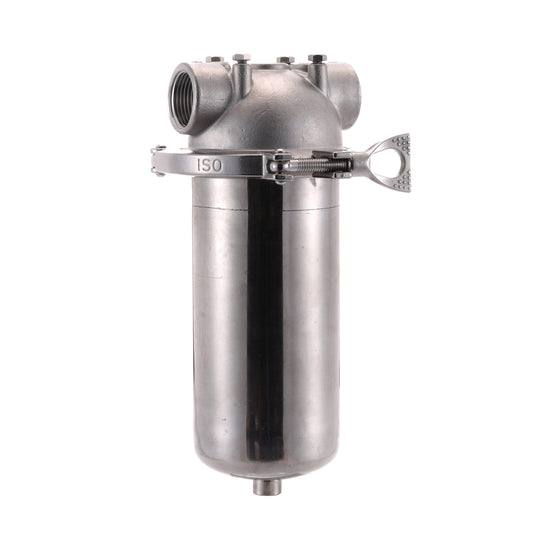
This is the consumables chapter of our stainless steel filter housing buyer's guide. Both cartridge types are in filter cartridges and bags; the mesh range has its own stainless steel mesh cartridges page.
What is the difference between a reusable stainless steel filter cartridge and a PP cartridge?
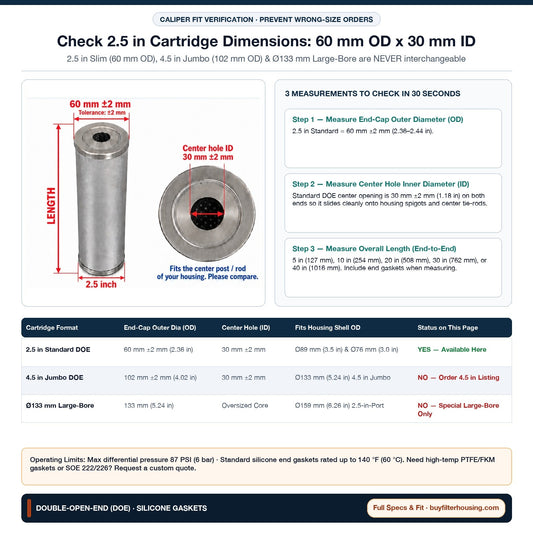
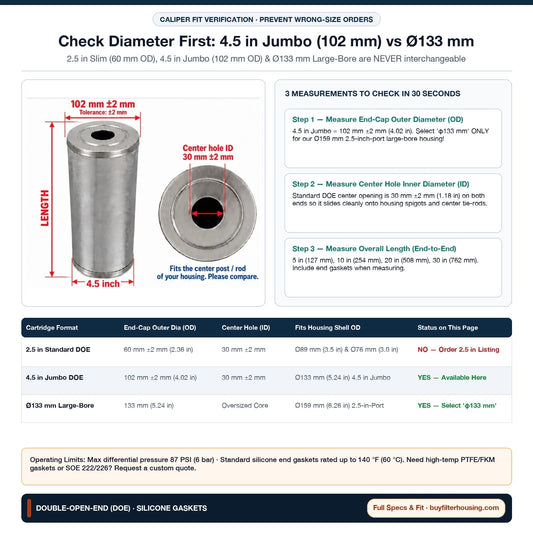
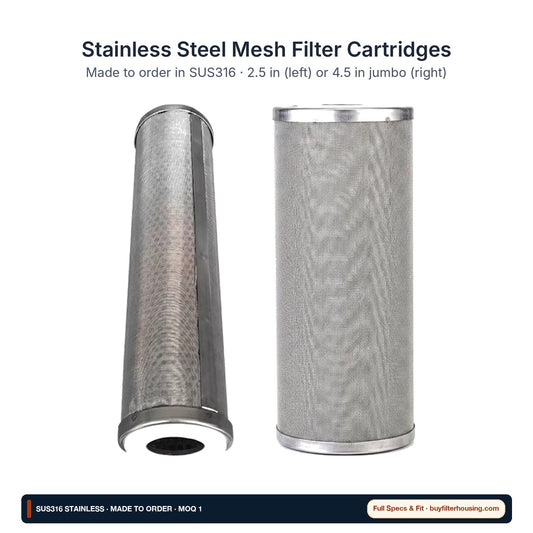
Where the dirt stops. A woven mesh cartridge stops particles at its surface: the openings are a fixed geometry, anything larger than the opening stays on the outside, and the cake that builds there is what you wash off. Haver & Boecker, a wire mesh maker, puts the two mechanisms side by side: "Wire mesh filters rely on surface filtration, meaning particles are trapped on the surface of the mesh," while "Cartridge filters use depth filtration, capturing particles throughout the media" (Haver & Boecker, wire mesh vs cartridge filters). A melt-blown PP cartridge is a thick mat of thermally bonded polypropylene fibers, denser toward the core; Shelco's description of its melt-blown range is typical: "Graded density construction provides true depth style filtration," and "Fixed pore construction allows higher dirt holding capacity without unloading" (Shelco, melt-blown depth cartridges). Particles lodge at different depths by size, which is why a depth cartridge copes with mixed sediment and why it cannot be cleaned. Clean Water Store's selection guide draws the practical consequence: "Depth filters remove more sediment and hold more sediment overall without losing pressure than a surface filter cartridge" (Clean Water Store, selecting a sediment cartridge). In our range the stainless mesh cartridge is 304 by default with 316L on request, double open end with flat ends, in 2.5 in lengths from 5 to 40 in and in 4.5 in jumbo; the PP melt-blown cartridges are 1 or 5 micron, 2.5 in or 4.5 in jumbo, sold in packs. Both fit the same housings.
Do the micron ratings mean the same thing?
No, and the difference decides the fine end of the argument. A melt-blown cartridge carries a nominal rating. The Water Quality Association's benchmark, as reported by Water Conditioning & Purification, "defines nominal to mean 85 percent rejection at the stated micron rating," against roughly 99.9 percent for an absolute rating, and its advice to buyers: "Always ask your supplier at what efficiency they grade their filters for nominal rating" (WC&P, absolute vs nominal cartridge ratings). A woven mesh is rated by its opening: a mesh count, or for the fine grades a µm figure, and where both are shown on our pages they are approximate equivalents only. Neither rating is an absolute cut-off. A 5 micron PP cartridge passes some 5 micron particles, and a 5 µm mesh is a woven surface whose openings are nominally that size. So the honest comparison at the fine end is this: where a stated micron cut-off matters, a rated disposable cartridge is the tool, and the mesh cartridge belongs in front of it taking the coarse load.
| Item | Stainless mesh cartridge | PP melt-blown cartridge |
|---|---|---|
| Mechanism | Surface filtration on a woven opening | Depth filtration through a graded fiber mat |
| Rating basis | Mesh count; µm for fine grades; approximate equivalents | Nominal micron rating; efficiency set by the maker |
| Listed range (our store) | 1 to 50 µm and 10 to 200 mesh | 1 or 5 micron |
| Dirt holding | Cake on the surface; pressure drop rises as it builds | Higher, held through the thickness |
| Mixed particle sizes | Fines pass, coarse stops | Caught at different depths |
| When loaded | Clean and refit | Replace |
| Cleaning | Six-step wash; acid soak for scale | Not cleanable; surface rinse only |
| Material | 304 default, 316L on request; PMI verifiable | Polypropylene |
| Limits | Cartridge conservative default 6 bar (87 psi), 60 °C (140 °F) | Per the cartridge maker |
| Purchase | One at a time | Packs of 10, 4 or 2 by size |
| Waste | None until the mesh is damaged | One cartridge per change |
How do you compare cost per year?
By counting changes, not comparing two price tags. A mesh cartridge costs more than a PP cartridge, and the comparison looks one-sided until you write the year out. Disposable side: the price of one PP cartridge from the pack, times the number you replace in a year, plus the labor of each change, the downtime if the line stops, and disposal. Reusable side: the price of one mesh cartridge and one spare, spread over however long they last in your water, plus the labor of each cleaning, which takes longer than a change because the cartridge soaks. We do not put a number on how many cycles a mesh cartridge lasts, because it depends on the liquid, the grade and the cleaning; fill that line by assuming it lasts as long as the mesh stays intact and the ends stay flat, and check the assumption on your own line. The crossover comes when the cartridges you would have thrown away in a year add up to more than the mesh cartridge and its spare: quickly on a line that changes PP often for the same coarse load, perhaps never on a line that changes rarely, where the PP pack is the right answer. Prices for both are on the product pages and depend on the country you order from, so the arithmetic is yours, and so is the labor figure, the one most buyers forget. Haver & Boecker's summary of the long run applies to industrial lines: "Cartridge filters, being disposable, generate more waste and can lead to higher long-term costs," with the qualifier, from the same page, that cartridges remain the choice for very fine filtration.
When does each one win?
| Duty | Pick | Why |
|---|---|---|
| Pump suction, nozzle and heat exchanger protection | Stainless mesh | Coarse, steady load; wash and refit |
| Well water with sand and grit, chloride low | Stainless mesh, PP behind it if fines matter | Mesh takes the sand; PP polishes |
| Fine silt, turbidity, mixed sizes | PP melt-blown | Depth holds mixed sediment without plugging early |
| RO pre-filtration to a stated micron level | PP melt-blown, mesh ahead of it | Rated cut-off protects the membrane |
| Coolant, wash tanks, rinse water with chips and scale | Stainless mesh | Repeatable load; no cartridge in the bin each change |
| Hot liquid within the cartridge default | Stainless mesh | Metal; PP limits are the maker's |
| Brackish or chloride water | 316L mesh or PP | 304 mesh pits; PP is unaffected by chloride |
| Product changeover, no carry-over allowed | PP melt-blown | Single use, nothing to clean between batches |
| Remote site, no one to clean cartridges | PP melt-blown | Change is faster than clean |
| Site policy to cut consumable waste | Stainless mesh wherever the rating allows | Nothing disposed of until the mesh is damaged |
Two rows deserve a note. Chloride water is the one case where the plastic cartridge is more robust than the steel one: polypropylene does not pit, 304 does, and the mesh answer there is 316L, as 304 vs 316L for cartridges explains. And the series arrangement is not a compromise; it is the standard layout. Clean Water Store's typical setup is a washable pleated pre-filter followed by a finer depth cartridge; a mesh cartridge in the first housing does the same job.
Can you run both in the same system?
Yes, and it is usually the best answer. Put the mesh cartridge in the first housing at a coarse grade matched to the sand, scale or chips you see, and the PP cartridge in the second at the micron level your process needs. The mesh takes the bulk of the load and is washed on its differential pressure; the PP cartridge sees only what passed the mesh and is changed on its own differential, far less often than it would be alone. The two housings can be the same 2.5 in or 4.5 in format, since both cartridge types share the double open end sizes.
FAQ
Can a stainless mesh cartridge replace my 5 micron PP cartridge?
On a coarse, repeatable load, yes, and it stops going in the bin. Where a stated micron cut-off at that level matters, keep the rated disposable and put the mesh in front of it; the mesh rating is a woven opening, not an efficiency figure.
How many times can a stainless cartridge be cleaned and reused?
We do not give a number, because it depends on the liquid, the grade and how it is cleaned. It is reused until the mesh is torn or stretched or the end faces no longer sit flat; the cleaning article covers the routine and the inspection.
Can I rinse and reuse a PP melt-blown cartridge?
A surface rinse removes the cake on the outside and buys a little time, but the particles held inside the mat do not come out, so the pressure drop does not return to the clean reading. Treat it as disposable and change it on differential pressure.
Which one is cheaper?
Per cartridge, PP. Per year, it depends on how many PP cartridges you throw away; count them, multiply by the pack price per cartridge, add the labor, and compare with one mesh cartridge and a spare. Prices are on the product pages.
Do they fit the same housing?
Yes. Both are double open end cartridges in the 2.5 in and 4.5 in jumbo formats, so they interchange in the same housing; confirm length and diameter against the size guide before ordering.
Not sure which cartridge your line should run?
Send the liquid, the solids you see, the flow and the micron level your process needs, and we will say whether it is a mesh duty, a PP duty or a mesh-then-PP duty. Mesh cartridges are ordered one at a time with the grade verifiable by PMI; PP cartridges come in packs; and multi-cartridge housings for either stage are drawn for your flow and delivered to drawing dimensions. Start at custom filter housings or request a quote.